
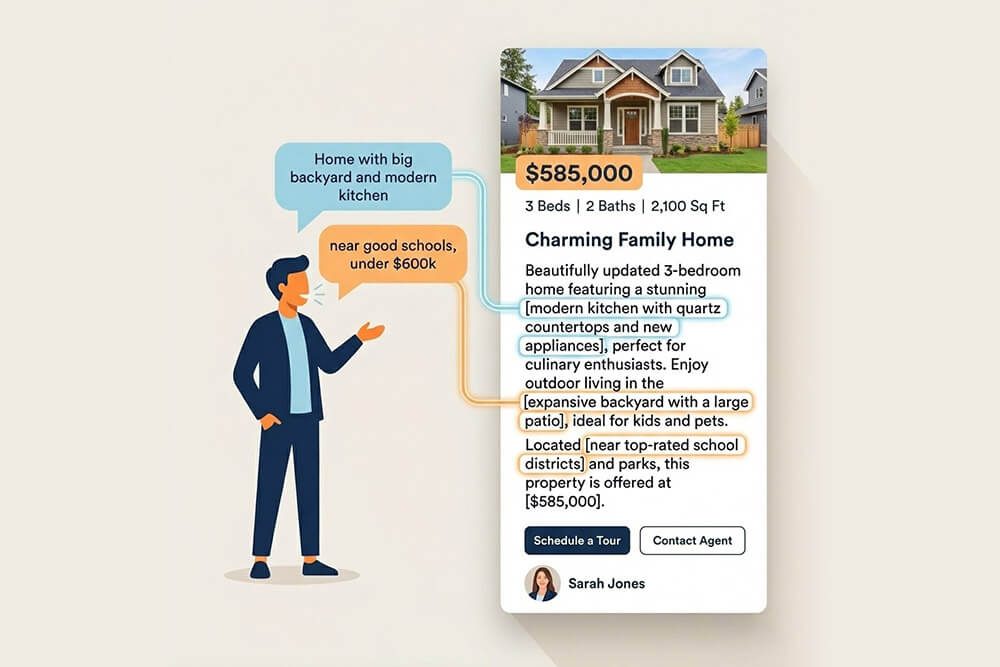
The way homebuyers search for real estate is changing fast. Platforms like Zillow, Realtor.com, and Redfin now use AI and natural language search, which means buyers no longer rely solely on filters. Instead, they type out exactly what they’re looking for and the platforms try to match listings that fit.
This shift is good for buyers. It’s also a wake-up call for realtors.
If your listings aren’t written or structured in a way that AI understands, they might not show up at all.
Buyers Are Searching in Full Sentences Now
Instead of just filtering for “3 bed / 2 bath,” buyers are typing things like:
“A 3-bedroom home near Shelby Park with a fenced yard and a modern kitchen”
“A quiet cul-de-sac close to top-rated schools in Nolensville”
“A home with a home office and a walkable neighborhood near coffee shops”
These searches rely on AI to understand the request and surface matching listings. That means listings need to match the language buyers use.
What to do:
- Write descriptions in clear, natural language.
- Include local landmarks, features, and lifestyle cues (e.g., walkable, fenced yard, close to Greenway).
- Skip vague buzzwords like “stunning” or “must-see.” Be specific instead.
Visuals and Video Matter More Than Ever
AI also scans photo metadata, video captions, and voiceovers when ranking content. If you’ve uploaded a great drone shot but labeled it “IMG_3471.jpg,” the system can’t tell what it is.
What to do:
- Rename image files before uploading: “front-exterior-nolensville.jpg” instead of “IMG_1029.jpg”
- Add alt text and captions that mention what’s in the image
- Use voiceover or subtitles in listing videos to include important keywords
- Don’t skip local cues, name the neighborhood or nearby landmarks
AI Ranks Listings Based on Relevance, Not Just Timing
The days of relying on post timing or boosting alone are fading. AI-based ranking systems surface listings based on how well they match what the buyer asks for.
This means your listing can still get surfaced weeks after posting if it’s relevant.
What to do:
- Focus on accuracy and relevance over filler content
- Keep descriptions updated with any changes (e.g., “new roof in 2023” or “just added screened-in porch”)
- Mention unique elements that people may search for like “fiber internet,” “covered porch,” “zoned for Scales Elementary”
AI-Optimized Listings Help You Stand Out
Realtors who adapt will have an edge. It’s not about gaming the system — it’s about helping buyers find homes that fit. When your media and descriptions match the way real people search, your listings are more likely to get seen and clicked.
Quick wins:
- Use natural language in every listing
- Be specific about what the home offers and where it’s located
- Make sure your photo and video files are labeled properly
- Add location-specific info throughout the description and captions
Moving Forward
The rise of AI in real estate search is already here. Your listings don’t need to be perfect they just need to be readable, clear, and helpful. Start now, and you’ll be ahead of the agents still writing for algorithms from five years ago.
If you need help making your listings easier to find (and easier to love), RML can help you plan, create, and optimize your media for today’s search landscape.